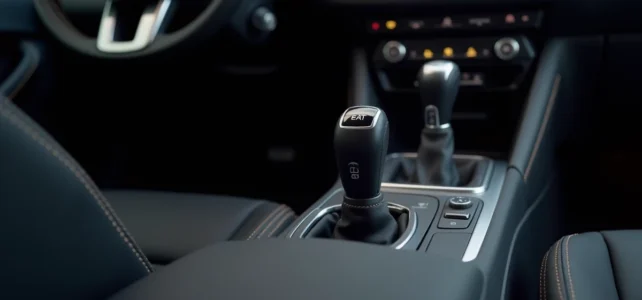
The EAT8 gearbox mounted on the Peugeot 308 is based on a torque converter architecture with eight gears, developed in collaboration with the Japanese supplier Aisin. This technical choice distinguishes it from dual-clutch transmissions through hydraulic operation that prioritizes smoothing out jolts rather than raw speed in gear shifts.
Hydraulics of the converter and gear management on the 308 EAT8
The torque converter connects the engine to the epicyclic gear train. On the 308, this converter includes a lock-up clutch that engages at low revs to limit slippage and thermal losses. It is this early lock-up that explains the almost total absence of slipping at stabilized speeds.
The eight gears are spaced to keep the engine within its optimal torque range. For PureTech gasoline engines and BlueHDi diesel engines, the electronic management adapts the shift mapping based on pedal input, incline, and the selected mode (D, M, or Sport). We observe that mode M, often overlooked by drivers, offers valuable control when descending or merging onto highways.
To delve deeper into the operation of the Peugeot 308 EAT8 automatic gearbox, understanding this hydraulic logic is a prerequisite before addressing maintenance issues or comparing it with other transmissions.
EAT8 oil change: actual frequency and recommended oil
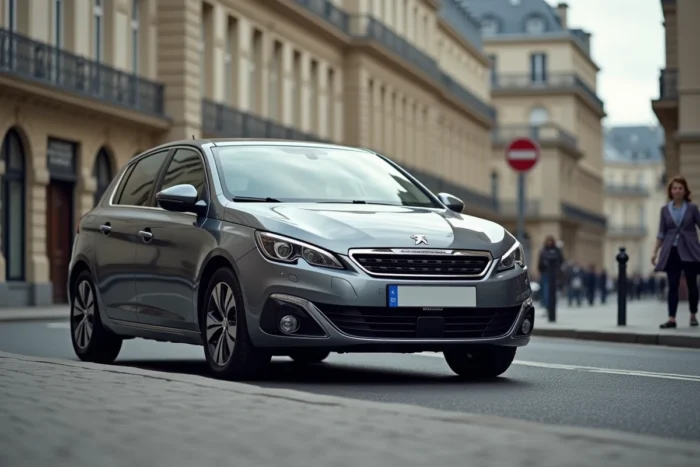
The manufacturer’s narrative often presents the oil of the EAT8 gearbox as a “lifetime” fluid. In practice, a periodic oil change is strongly recommended to maintain reliability. Workshop feedback converges on a fluid ATF replacement interval of every 60,000 km under normal use, reduced to 40,000 km under intensive use (dense urban traffic, regular towing).
Ignoring this oil change exposes the hydraulic mechanism to a gradual degradation of the fluid’s properties, resulting in jolts during gear shifts and, ultimately, premature wear of the internal clutches. We recommend having the fluid’s condition analyzed at each service to anticipate replacement.
Warning signs to watch for
- Light jolts when shifting from 2nd to 3rd gear, especially when cold, indicating fluid nearing the end of its life or an insufficient level
- Noticeable delay in kick-down (forced downshift during full acceleration), a sign of weakened hydraulic pressure
- Engagement in limp mode with a lock on a single gear, requiring immediate electronic diagnosis
EAT8 or e-DCS7: which transmission on the recent hybrid 308
One point that most articles dedicated to the EAT8 overlook: on the latest hybrid versions of the 308, Peugeot is gradually replacing the torque converter EAT8 with the electrified e-DCS7 triple-clutch gearbox, resulting from a joint venture with Punch Powertrain. The transmission philosophy changes radically.
The e-DCS7 operates like a wet dual-clutch, directly integrating the electric motor into the powertrain. Shifts are drier, faster, with a “robotized” behavior rather than the hydraulic smoothness of the EAT8. For a buyer of a recent hybrid 308, checking which gearbox actually equips the vehicle is a step not to be overlooked.
Implications for maintenance and resale
The maintenance of an e-DCS7 differs from that of an EAT8. The fluid for the dual-clutch has its own specifications and intervals. In the used car market, a 308 hybrid EAT8 and a 308 hybrid e-DCS7 do not offer the same driving pleasure, which justifies consulting the type approval number or technical sheet before any purchase.
Concrete advantages of the EAT8 on the Peugeot 308 in daily use
The reduction in consumption compared to the old EAT6 is real. The addition of two extra gears allows for maintaining a lower engine speed on the highway, resulting in a significant decrease in fuel consumption on long trips. The extended Stop & Start function cuts the engine during the deceleration phase, even before the vehicle comes to a complete stop.
In urban environments, the EAT8 eliminates the fatigue associated with repetitive clutch use in traffic jams. The D driving mode manages gear transitions on its own without requiring driver input. The comfort of the brake pedal is sufficient to control the entire transmission.
Sport mode and paddle shifters
Sport mode alters the mapping by holding gears longer before shifting up. On the 308 equipped with paddles, the driver can force a downshift without leaving D mode, which offers appreciable responsiveness during overtaking without switching to permanent M mode.
The combination of these modes (D, M, Sport) covers almost all driving situations. There are few cases where the EAT8 shows any shortcomings, except for a slight response time in kick-down compared to competing dual-clutch gearboxes.
The EAT8 remains a benchmark transmission on the thermal and older generation hybrid 308. Its gradual replacement by the e-DCS7 on recent hybrid versions does not undermine its inherent qualities but necessitates careful verification of the vehicle’s equipment before purchase, especially in the used car market.