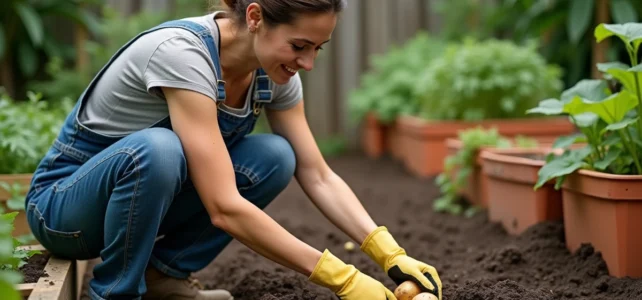
Harvesting potatoes in a few square meters presents a concrete problem: the yield drops quickly if the soil becomes depleted or if the plants interfere with each other. In a small area, every mistake in preparation or timing costs more than in a field. However, a few technical adjustments can help maximize each row, even in a vegetable patch or raised bed.
Quality of substrate in a small vegetable garden: the often underestimated factor
Have you noticed that potato plants grow well the first year in a container, then decline the following season in the same spot? The problem rarely comes from the variety. The soil structure directly affects the yield, and this is even more true in small-scale cultivation.
In urban or heavily modified soils, improving organic matter before planting becomes a determining factor. Potatoes are demanding in terms of humus. Poor or chalky soil promotes diseases and limits tuber formation. In a container or raised bed, this phenomenon is amplified because the volume of available soil is restricted.
Adding well-decomposed compost before planting remains essential. Mix it throughout the depth of the container or bed, not just on the surface. If you are cultivating in open ground on a small space, a green manure sown the previous autumn (such as phacelia or mustard) improves the structure without taking up space during the growing season.
This preparatory work makes the difference between numerous and regular tubers, and a handful of disappointing small potatoes. As detailed in the practical guides on Clic Garden, optimizing each square meter begins well before planting the seedlings.
One point not to overlook: potatoes should not return to the same location more than once every three to four years. In a small area, this rotation may seem restrictive. Alternate with legumes or squash to regenerate the soil between two cycles.
Hilling and mulching in a small area: protect without losing space
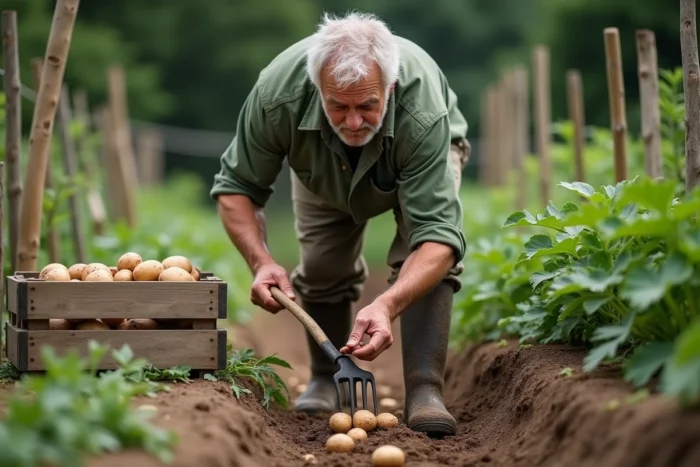
Hilling involves bringing soil up to the base of the plants to cover the stems as they grow. Tubers form along the buried part: the higher you hill, the more you harvest. In a small vegetable garden, this technique poses a practical problem. Where to find extra soil without digging between the rows to the point of uprooting neighboring plants?
The most suitable solution for small areas involves thick mulching. Replace part of the hilling soil with straw, hay, or dead leaves. Mulching keeps the foliage dry and reduces the pressure from blight, a significant advantage as summers become wetter and stormier.
Specifically, proceed in several passes:
- First classic hilling with soil when the plants reach about fifteen centimeters, to anchor the plants securely.
- Second pass with a soil-straw mix: add a thick layer of mulch around the stems, leaving only the upper leaves exposed.
- Third pass with mulch only if the stems continue to grow. This layer also limits evaporation and reduces watering.
In containers or towers, the sensitivity to heat increases significantly. The reduced soil volume heats up quickly during heatwaves. Thick mulching and targeted watering during the tuberization period (when flowers appear) become essential to prevent the tubers from stopping their growth.
Staggered harvesting: take without uprooting the plant
In a large plot, entire plants are pulled when the foliage yellows. In a few square meters, this method wastes potential. There is a more efficient approach.
Harvest a few tubers by hand without uprooting the plant. Slide your hand into the soil or mulch at the base of the stem, feel for the largest tubers, and gently detach them. The remaining potatoes continue to grow for several weeks.
This staggered harvesting method has two concrete advantages in a small area:
- It spreads production over time instead of delivering a large volume all at once, which is difficult to consume or store when growing on a balcony or small patch.
- It maximizes the total yield of the plant, as the tubers left in the ground benefit from the released space to grow larger.
- It allows you to check maturity gradually, without risking harvesting the entire crop too early.
Wait until the foliage starts to yellow significantly before uprooting the last plants and retrieving the remaining tubers. Harvest in dry weather: potatoes taken from wet soil do not store as well.
Spacing of plants in a small space: finding the right compromise
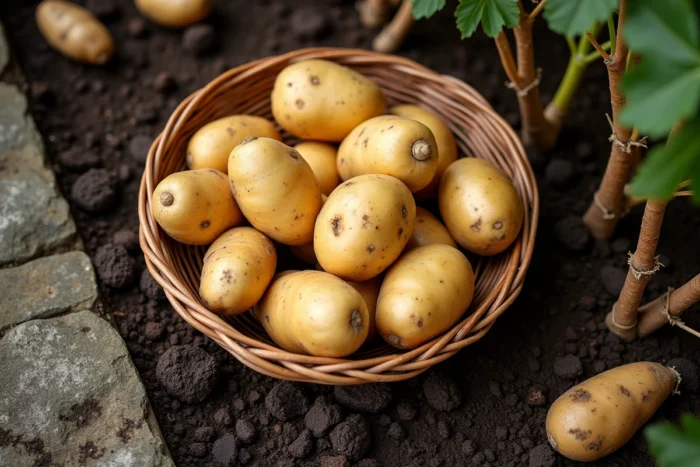
The temptation is strong to crowd the plants to fit more in. This is counterproductive. Plants that are too close compete for water, nutrients, and light. The foliage becomes dense, dries poorly after rain, and blight establishes more easily.
Maintain sufficient spacing for air to circulate between the rows. It is better to have fewer well-spaced plants than many crowded plants. Opt for compact varieties if your space is truly limited. Early varieties occupy the ground for a shorter time, freeing up space for a late-season crop.
In towers or bags, the logic changes. Growth occurs upwards, layer by layer. Each hilling level creates a new tuberization zone. Ensure a sufficient diameter or side for the roots to have space. A container that is too narrow limits production as much as spacing that is too tight in open ground.
Harvesting potatoes in a small area relies less on spectacular tricks than on the rigor of a few simple actions: a rich and well-prepared soil, appropriate hilling for the container, staggered harvesting, and respected spacing. These four points, applied together, contribute more to yield than any gardening gadget.