
In France, the vast majority of elderly people wish to stay in their homes for as long as possible. This aspiration faces a material reality: the housing as originally designed is not always suitable for the gradual loss of mobility or orientation.
Home equipment for seniors covers a wide spectrum, from grab bars to connected sensors. Their market is evolving rapidly, particularly due to passive home automation and new financing devices.
Passive sensors and AI at home: what changes for senior safety
The most visible content on the subject lists classic equipment (canes, walkers, shower seats). They overlook a recent trend: passive sensors integrated into the home are gradually replacing wearable devices. Emergency call bracelets, alert pendants: these objects assume that the person wears them at all times, which is often not the case.
Fixed systems, without cameras, now analyze movements within the home using motion sensors coupled with artificial intelligence. They detect unusual nighttime rises, prolonged immobility, or a lack of passage in the kitchen, and send an alert to caregivers. Respect for privacy is a central argument for these devices: no images captured, no microphones, only movement data.
For families facing a loved one’s refusal to wear a bracelet, this approach changes the game. However, field feedback varies on the reliability of alerts in large homes or in the presence of pets, which generate false positives. Before investing, it is useful to discover the equipment on Happy Seniors to compare available solutions based on the home’s configuration.
Bathroom and transfers: the areas where equipment most reduces the risk of falls
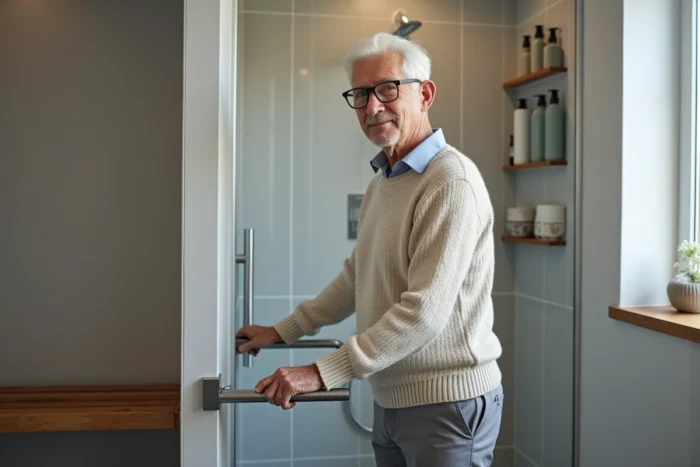
The bathroom accounts for the majority of domestic falls among the elderly. Wet floors, stepping over the bathtub, and the lack of support when rising are three cumulative risk factors. Adapting this room is often the first intervention recommended by occupational therapists during a home assessment.
The equipment that makes a difference is not always the most expensive. A foldable wall-mounted shower seat combined with an L-shaped grab bar addresses two needs at once: prolonged standing and sitting-to-standing transfers. The toilet riser with armrests is another underestimated item that facilitates rising without requiring assistance.
The available data does not allow for conclusions about the superiority of one brand over another for this equipment. However, a few technical criteria deserve systematic verification:
- The maximum load supported, which varies by model and must correspond to the actual weight of the user with a safety margin
- The type of fixation (suction cup, screws, chemical sealing), to be chosen based on the existing wall covering
- The presence of a non-slip coating on seating surfaces and handles, including when wet
Financing for senior equipment: MaPrimeAdapt’ and actual out-of-pocket costs
Since 2024, the MaPrimeAdapt’ program brings together several public aids for adapting the housing of elderly people or those with disabilities. It aims to simplify the procedures, which previously went through different channels depending on the type of work.
The coverage rate varies according to the household income, and eligible works include bathroom modifications, installation of motorized roller shutters, or the establishment of a night lighting path. The intervention of a project management assistant (AMO) is mandatory to prepare the file, which adds a delay to the process.
The actual out-of-pocket costs depend on several parameters that online simulators do not always take into account. Quotes must be established before the work begins, and any installation carried out before the Anah agreement renders the funding void. This administrative constraint is the main source of file abandonment, according to feedback from local support organizations.
Coordination with APA and pension funds
The personalized autonomy allowance (APA) can finance certain light equipment (technical assistance, small materials) as part of the aid plan established after GIR assessment. Complementary pension funds also offer occasional assistance for housing modifications, often unknown to beneficiaries. The coordination between these different programs is not automatic: it is up to the individual or their caregiver to contact each organization separately.
Passive home automation and adapted lighting: beyond the gadget
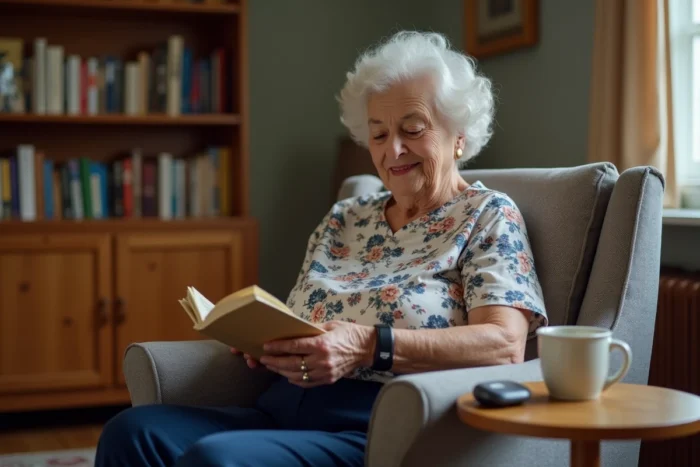
Automatic lighting through presence detection is one of the simplest and most effective equipment to prevent nighttime falls. A light path between the bedroom and the bathroom reduces disorientation upon waking, especially in individuals with early cognitive impairments.
Motorized roller shutters, often seen as unnecessary comfort, meet a concrete need: operating a crank or strap shutter becomes difficult with joint pain in the shoulders or hands. Their motorization falls within the scope of MaPrimeAdapt’ when prescribed as part of a housing adaptation.
Passive home automation goes further with programmed scenarios: automatic shutdown of cooking plates after a delay, alert if the front door is left open, heating regulation room by room. These automations compensate for forgetfulness without imposing technological manipulation on the elderly person, which distinguishes them from tablets or applications that assume a digital proficiency rarely acquired.
Adapting the home is not just a shopping list. Each home presents its own constraints (door widths, floor types, electrical configurations) that make evaluation by an occupational therapist or specialized technician difficult to replace with a simple catalog. Financial aids exist but require adherence to a strict administrative schedule. It is often the anticipation, well before the first fall, that determines the quality of home care.