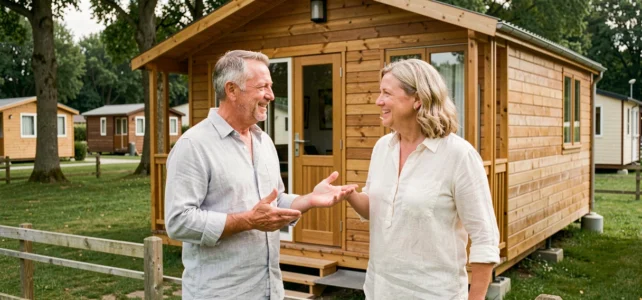
In Vendée, residential leisure parks (PRL) with land transfer attract buyers looking for a second home in a natural setting. The principle seems simple: acquire a plot of land in full ownership within a developed park, install a mobile home or chalet, and enjoy access to the sea or the Vendée marshes. However, the legal and land realities of these operations deserve closer examination than what most commercial brochures suggest.
Zoning and PLU: what full ownership does not guarantee
The first instinct of a buyer in a PRL is often to check the price of the plot and the amenities of the park. However, the document to prioritize is elsewhere. The transfer of a plot does not change the urban destination of the land. Even as the owner of the land, the buyer remains subject to the leisure zoning defined by the local urban plan (PLU) of the municipality.
In practical terms, this means that a sales deed in a PRL does not automatically create the right to establish a tax residence on the plot or to reside there year-round. The distinction between leisure residence and primary residence depends on the classification of the zone in the PLU, not on ownership status. This point, often underestimated, conditions the actual use of the property in the long term.
Before any signing, it is relevant to gather opinions on PRLs with land transfer in Vendée to assess the real constraints faced by existing owners.

Operational urban planning certificate: the key document before purchasing a PRL plot
The internal regulations of the residential leisure park describe the daily living conditions (maintenance of common areas, types of permitted housing, hours). It does not provide information on public utility easements, environmental constraints, or municipal development projects that could affect the plot.
The operational urban planning certificate is the only document that compiles this information. Unlike the simple urban planning certificate, which only indicates the applicable rules, the operational version verifies whether a specific project (here, the installation of a leisure residence) is feasible on the targeted land. It lists:
- The exact zoning of the plot and the urban planning rules that apply to it, including any restrictions related to a risk prevention plan
- Public utility easements (passages, networks, environmental protections) that encumber the land
- The list of taxes and urban planning contributions required at the time of the operation
This certificate is requested at the town hall and remains valid for several months. Obtaining it before signing the preliminary agreement helps avoid costly surprises, especially on the Vendée coast where regulatory constraints overlap.
Coastal risk in Vendée: a selection criterion that has become crucial
Vendée is not a homogeneous market for PRLs. Between a plot located in the interior bocage and another in immediate proximity to the coastline, the stakes differ significantly. Coastal risk has become a real selection issue for plots, and not just for comfort reasons.
Several elements must be considered before committing:
- The natural risk prevention plan (PPRN) or coastal risk prevention plan (PPRL) of the municipality, which may classify certain areas as unbuildable or subject existing constructions to costly prescriptions
- The history of natural events (submersions, erosion) in the area, accessible through public risk management databases
- The insurability of the property: some companies apply surcharges or refuse to cover residences located in high-risk areas, complicating resale as well
A residential leisure park may display an idyllic setting by the sea while being located in an area where resale will be difficult in ten years. Insurability and resale value depend on risk zoning, not just on the tourist attractiveness of the area.
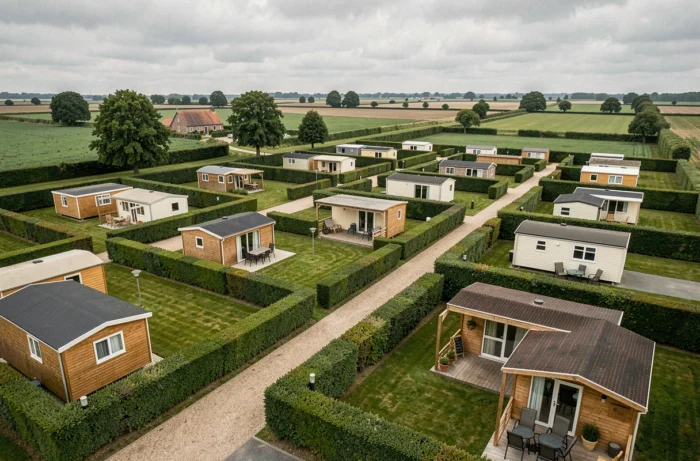
Annual charges and taxation of a PRL with land transfer
Becoming the owner of a plot in a PRL incurs recurring charges distinct from those of a traditional rental campsite. The owner bears the property tax on the land, as they own the soil. This is supplemented by the co-ownership or park management fees (maintenance of roads, green spaces, pool if applicable), which vary according to the services offered.
The housing tax may also apply if the residence is furnished and designated for personal use, according to current tax rules. The distinction between leisure residence and second home has direct consequences on local taxes. Field reports vary on this point: some owners in Vendée PRLs report paying a housing tax, while others do not, depending on the classification made by the local tax office.
On the resale side, the plot in full ownership is transferred like a classic real estate property, with notary fees and potential capital gains tax. The light residence (mobile home, chalet) placed on it remains a movable property, subject to rapid depreciation. Differentiating the value of the land from that of the light habitat is essential for estimating a realistic investment.
Light habitat in PRL: compliance constraints and lifespan
The type of habitat allowed in a PRL depends on both the park regulations and the urban planning code. Mobile leisure residences (mobile homes) and light leisure dwellings (wooden chalets, for example) meet different standards. A mobile home retains its status as movable property as long as it remains transportable, which implies not being permanently fixed to the ground by solid foundations.
The lifespan of a mobile home ranges from about fifteen to twenty years depending on maintenance and quality of manufacture. After this period, some parks impose the replacement of the residence to maintain the aesthetic homogeneity of the site. This clause, present in the regulations of many Vendée PRLs, represents a renewal cost to anticipate from the time of purchase.
The market for PRLs with land transfer in Vendée remains attractive for those seeking a leisure residence without the constraints of an annual rental lease. Full ownership of the land offers real land security, provided that zoning, natural risks, and applicable taxation are checked in advance. The operational urban planning certificate and consultation of the local PPRL are not mere formalities: they are the two safeguards of an informed purchase.