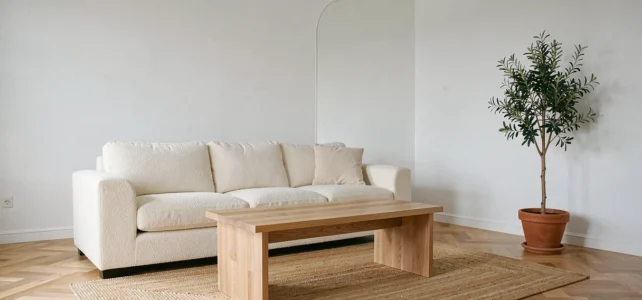
When renovating the insulation of a wall from the inside, you lose a few centimeters of living space, you remove the old baseboards, and you find yourself choosing a new wall covering. Decoration is not the priority in this kind of project: it stems from the construction work.
In 2024, this sequence has become widespread. The number of homes that have benefited from significant energy renovations funded by Anah has increased by 28% year-on-year, reaching 91,900 homes. This figure explains a large part of the current decoration trends, because you don’t decorate a newly restructured interior in the same way.
Energy renovation and decoration: the link that catalogs do not show
Replacing windows changes the amount of natural light that enters a room. Moving from single glazing to high-performance double glazing alters reflections, perceived temperature, and even the acoustics of the living room. These parameters then dictate the choice of wall colors and furniture.
When insulating from the inside, you rethink the volumes. A 10 to 15 cm layer on a load-bearing wall reduces the usable depth of a room. You often compensate with shallower furniture, built-in storage, and light shades that visually open up the space. This is where the popularity of neutral tones and clean lines comes from, not from an aesthetic whim.
You can also learn everything about Salon Tendances Habitat to understand how these technical choices guide the finishes. Decoration follows technical constraints, not the other way around.
Earthy colors and raw materials: what it really implies
Brown tones, terracotta, and beiges are everywhere in the 2024 selections. On a color chart, it’s appealing. On a construction site, it requires a bit of method.
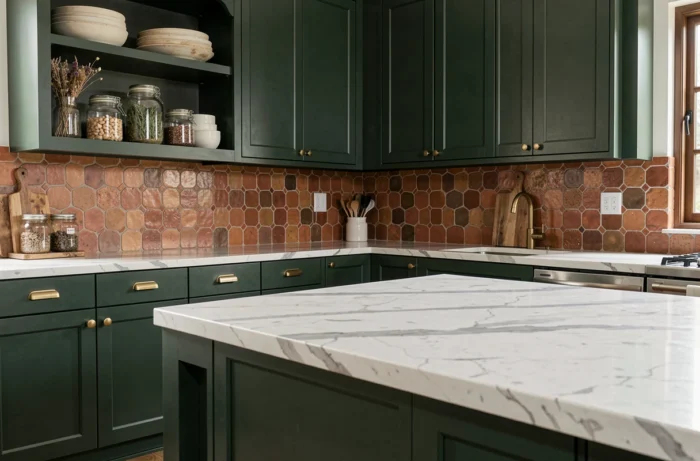
A terracotta or lime plaster wall absorbs light differently than a matte acrylic paint. If the room faces north, a strong terracotta can darken the overall feel and create a sense of confinement. Testing the shade on an entire wall before finalizing remains the only reliable way to judge the outcome.
In terms of materials, wood, rattan, and natural stone dominate. Their practical advantage: they age better than synthetic finishes, especially in humid rooms like the bathroom. Their limitation: cost. A natural stone countertop can represent a significantly higher budget than laminate, and feedback on stain resistance varies depending on the type of stone chosen.
Associations that work daily
- Light wood (oak, ash) paired with a sage green wall: the contrast remains soft and handles artificial light well in the evening
- Reconstituted stone as a kitchen backsplash with white lacquered furniture: easy to clean, visually stable over time
- Rattan in small touches (lighting, mirror) rather than as a centerpiece: it yellows less quickly when not exposed to full sunlight
Multipurpose spaces: adapting the room for various uses without tearing everything apart
The home office is not disappearing, but it no longer justifies a dedicated room for most households. Instead, there is a search to integrate a workspace into the living room or bedroom without sacrificing the comfort of the main room.
A secretary desk that closes in the evening solves 80% of the problem. You hide the screen, cables, and files, and the room becomes a living space again. This approach is more realistic than a movable partition, which is often costly and rarely soundproof.
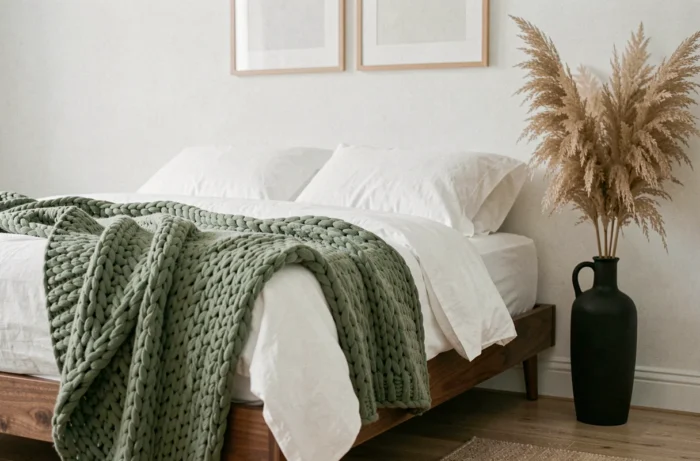
For families with children, the trend towards multipurpose interiors translates into modular storage. Stackable cubes in the living room allow for a quick transition from a play area to an open space in just a few minutes. The design here follows an operational need: to be able to change the use of a room without moving heavy furniture.
What changes concretely compared to previous years
There are fewer large open bookshelves and more closed furniture with textured fronts. The reason is simple: open interiors (kitchen-living room) accumulate dust on exposed shelves, and no one wants to spend their weekends dusting decorative objects.
Geometric patterns are returning on textiles (cushions, curtains, rugs) rather than on walls. A patterned wallpaper remains engaging over time, while a cushion can be replaced in a season. This pragmatism guides layout choices much more than trends seen on social media.
DPE and property valuation: when decoration becomes a financial lever
In 2024, a house rated G on the Energy Performance Diagnosis suffers a discount of up to 25% compared to a house rated D. Apartments rated F or G see a price drop of about 12%. This context changes the logic of investment in decoration.
Renovating an interior without addressing energy performance is like putting wallpaper on a damp wall: the result won’t hold. Homeowners who combine insulation and decoration in the same project achieve a double benefit, both aesthetic and patrimonial.
- Replacing an old convector with an inertia radiator frees up wall space and allows for a clean covering behind
- Installing underfloor heating during a floor renovation opens up choices for large format tiles or solid wood floors that would have been incompatible with the old system
- Installing thermal bridge-breaking windows changes the style of openings and may justify rethinking the arrangement of furniture around the windows
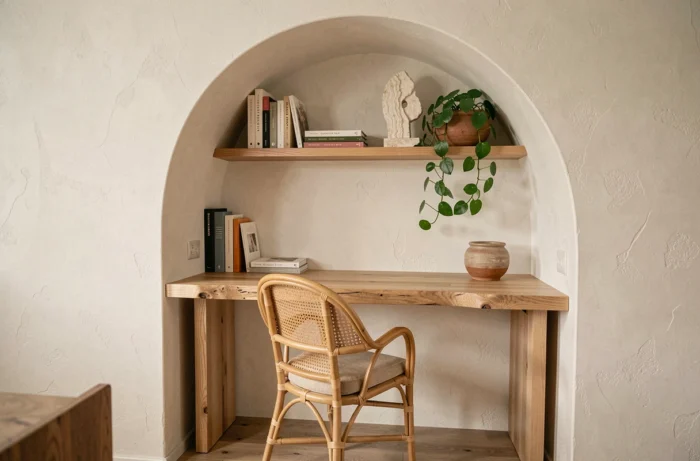
Each item of energy renovation leads to a decorative decision. Thinking about both together avoids paying for finishes twice. This is probably the least photogenic trend of 2024, but it has the most impact on the budget and value of a home.