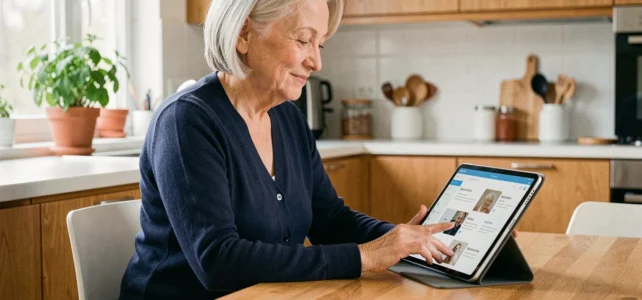
How to measure the actual effectiveness of devices designed to extend the autonomy of seniors at home? Between financial aid, connected objects, and support services, solutions are multiplying, but their impact varies significantly depending on the individual’s profile and the nature of the need addressed.
Cost and financing of housing adaptation: what MaPrimeAdapt’ covers
One of the most documented barriers to staying at home remains the cost of adaptation work. Since January 2024, MaPrimeAdapt’ finances 50 to 70% of the cost of work up to a ceiling of 22,000 euros excluding tax, depending on whether the household is classified as “modest” or “very modest”.
Eligible work goes beyond classic installations (step-free shower, stairlift, ramps). The scheme also covers equipment such as lighting with motion detectors, motorized roller shutters, or height-adjustable worktops in the kitchen.
A often underestimated point: a Project Management Assistant (AMO) is appointed free of charge to diagnose the housing, co-construct a work plan, and assist the individual in their procedures. This structured process distinguishes MaPrimeAdapt’ from previous aids, where seniors often had to navigate alone between organizations.
To learn more about MS Médical seniors, which offers complementary equipment to these adaptation works, the intersection between public aid and adapted medical equipment deserves to be studied on a case-by-case basis.
| Criterion | Very modest household | Modest household |
|---|---|---|
| Coverage rate | 70% | 50% |
| Work ceiling (excluding tax) | 22,000 € | 22,000 € |
| AMO support | Free | Free |
| Examples of work | Step-free shower, stairlift, motorized shutters, automatic lighting | Step-free shower, stairlift, motorized shutters, automatic lighting |
Connected objects for seniors: real utility depending on the type of need
Connected objects for the elderly cover three main functional categories. Their relevance directly depends on the targeted need.
Health monitoring and medication adherence
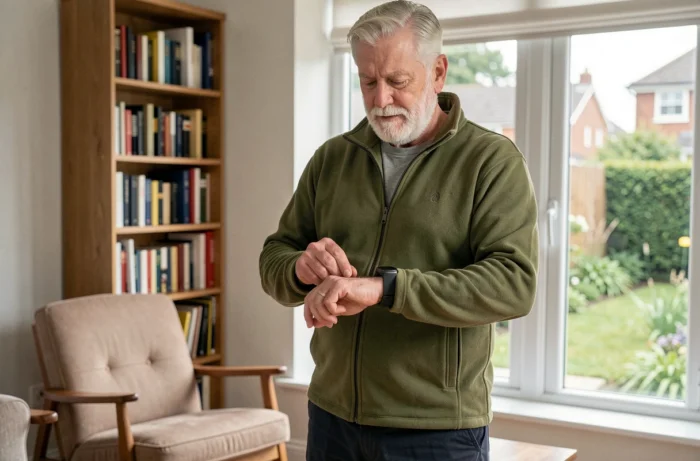
Connected pill dispensers alert the senior and their caregivers in case of missed doses. Watches and bracelets capture data on physical activity, heart rate, and sleep quality. These devices allow for remote monitoring of health status, which reduces unplanned medical visits and reassures relatives.
More specialized objects exist for specific pathologies. Connected blood glucose monitors for diabetics or tremor monitoring devices for patients with Parkinson’s illustrate this growing specialization.
Home safety
Fall detectors, motion sensors, and automatic alert systems form the foundation of connected safety. Fall detection remains the number one need expressed by caregivers. These sensors trigger a call to a tele-assistance center or a relative in case of prolonged immobility or a sudden impact.
Nutrition and hydration
Connected glasses, bottles, and forks measure nutritional and hydration intake. Their adoption remains more marginal, but for seniors suffering from malnutrition (a common risk after 75 years), these tools provide concrete data to caregivers.
- Connected pill dispenser: alerts in case of missed doses, history of doses sent to caregivers and the attending physician
- Connected bracelet or watch: tracks physical activity, heart rate, detects anomalies
- Fall detector: automatic alert to a tele-assistance service or designated contact
- Environmental sensors: monitors temperature, door openings, and water consumption
Support services and maintaining social connections
Technological solutions cover only part of the spectrum. Social isolation remains an aggravating factor for loss of autonomy, and no sensor can compensate for it alone.
Home support services combine human interventions (housekeeping, personal care, meal delivery) and digital tools. However, access to these services varies greatly depending on the regions. Rural areas experience longer response times and a more limited number of providers.
Simplified video conferencing applications, designed with streamlined interfaces and large buttons, facilitate contact between seniors and distant families. Some dedicated tablets also integrate cognitive games and reminders for medical appointments, making them versatile tools.
- Simplified tablets: video conferencing, cognitive games, appointment reminders, adapted interface
- Meal delivery combined with a friendly visit: dual nutritional and social function
- Collective prevention workshops offered by pension funds: adapted physical activity, memory, nutrition
Discrepancies between technological solutions and human support
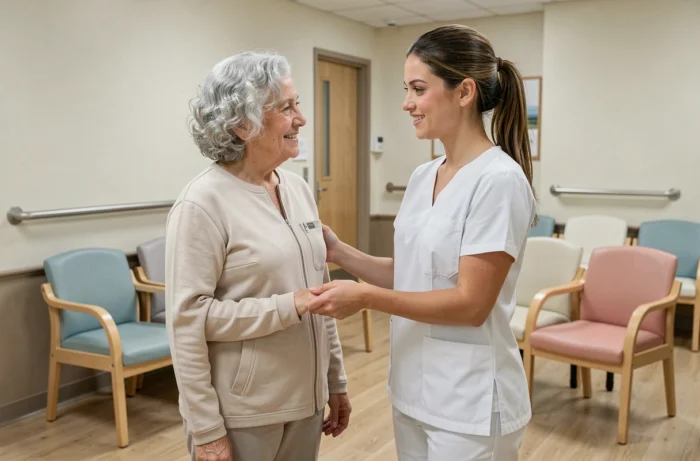
A connected object detects, measures, and alerts. It does not replace the presence of a trained caregiver. The connected pill dispenser signals a missed dose but does not verify whether the medication has actually been swallowed. The fall detector sends an alert, but the response time depends on the availability of local services.
The most effective approach combines both dimensions. The physical adaptation of the housing (funded by MaPrimeAdapt’), connected objects for remote monitoring, and regular human interventions form a triptych where each component compensates for the limitations of the other two.
The data captured by connected objects gain their full value when analyzed by a healthcare professional. Without this feedback loop, the risk is to accumulate alerts without corrective action, leading to decision fatigue among caregivers.
The choice between these solutions is not made from a catalog. It depends on the assessed level of autonomy (GIR grid), the available budget after aid, the housing configuration, and the presence or absence of close caregivers. Cross-referencing the GIR assessment with an AMO housing diagnosis remains the most reliable approach to define an adapted action plan.